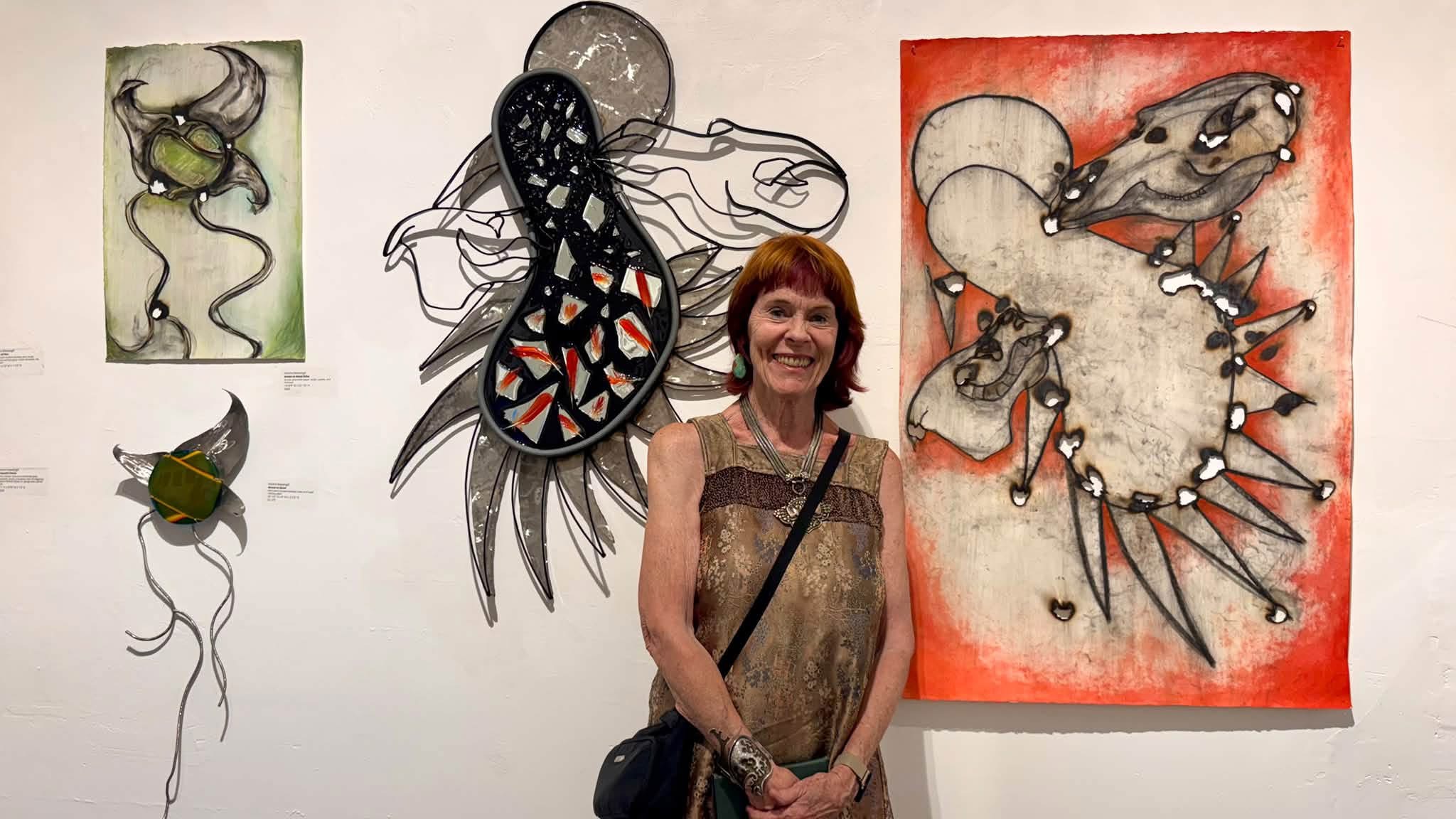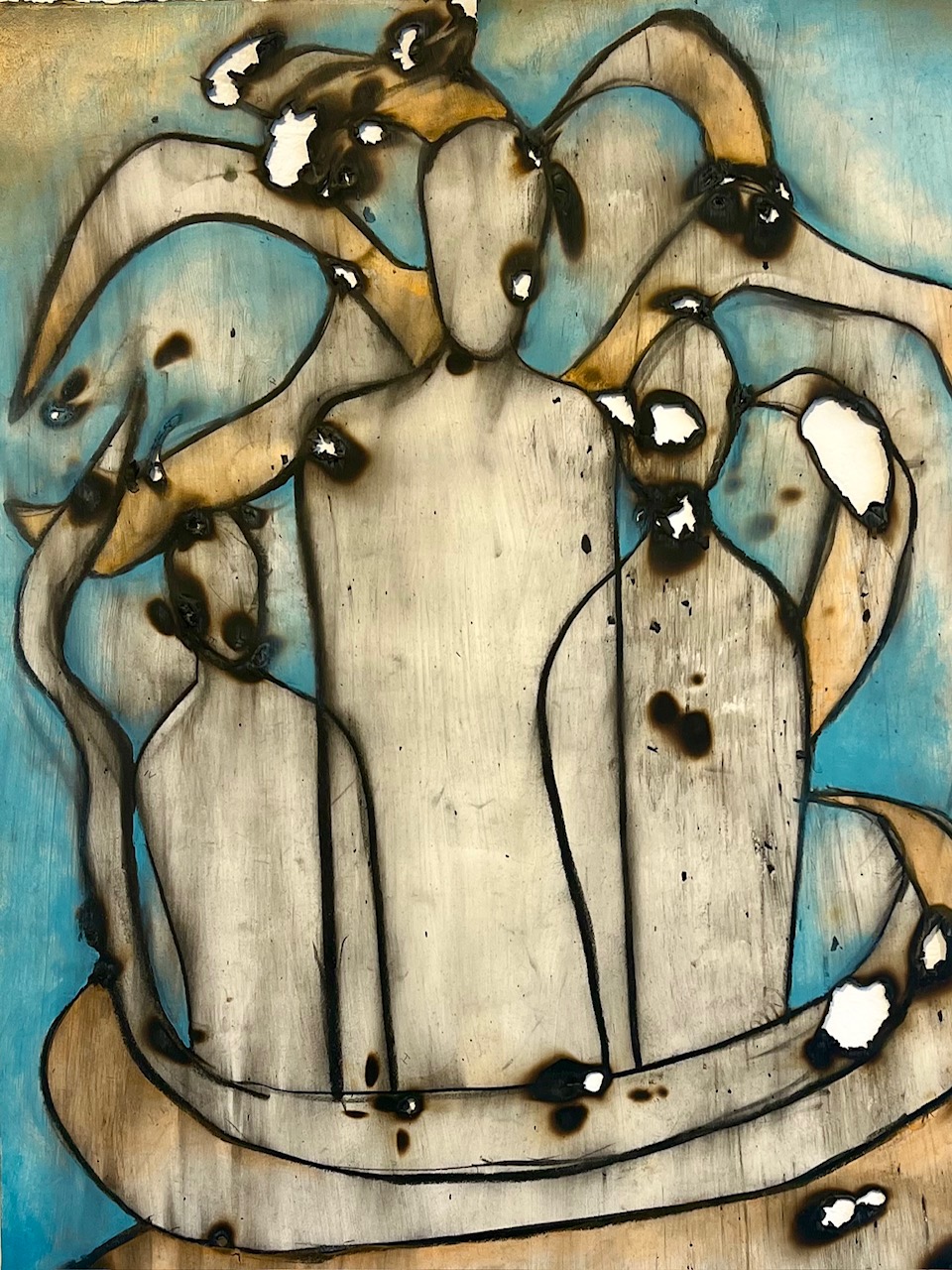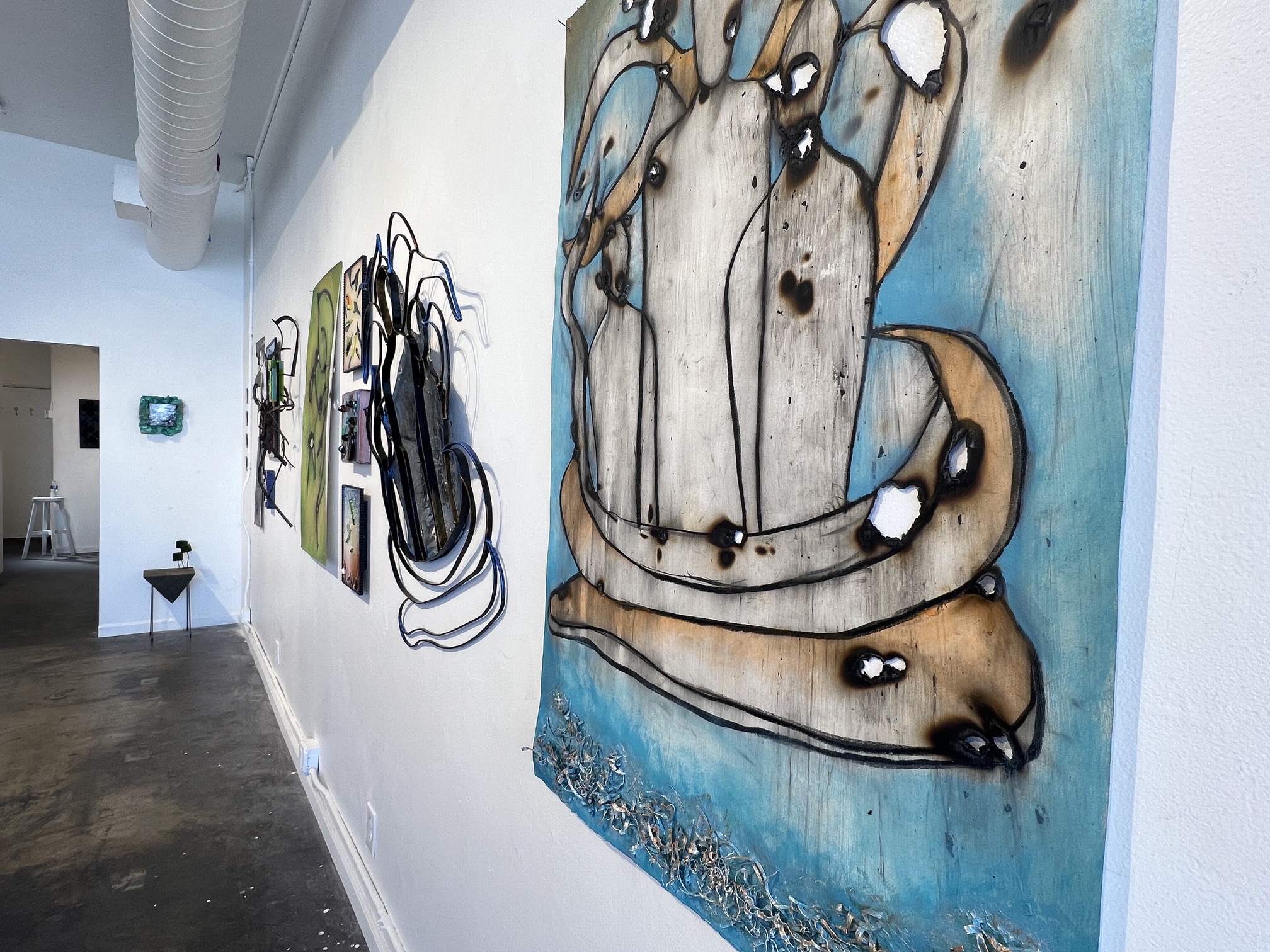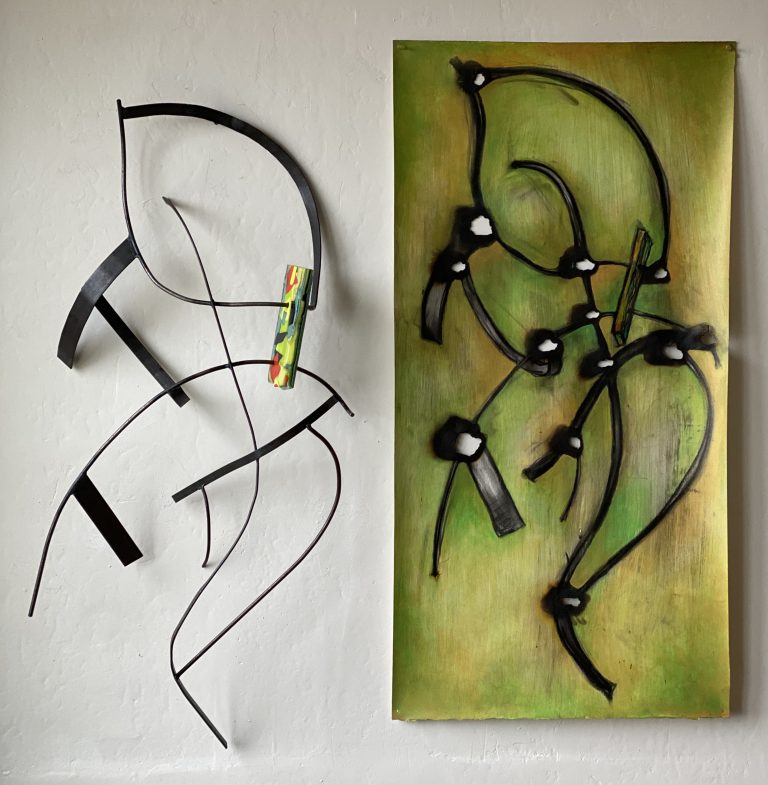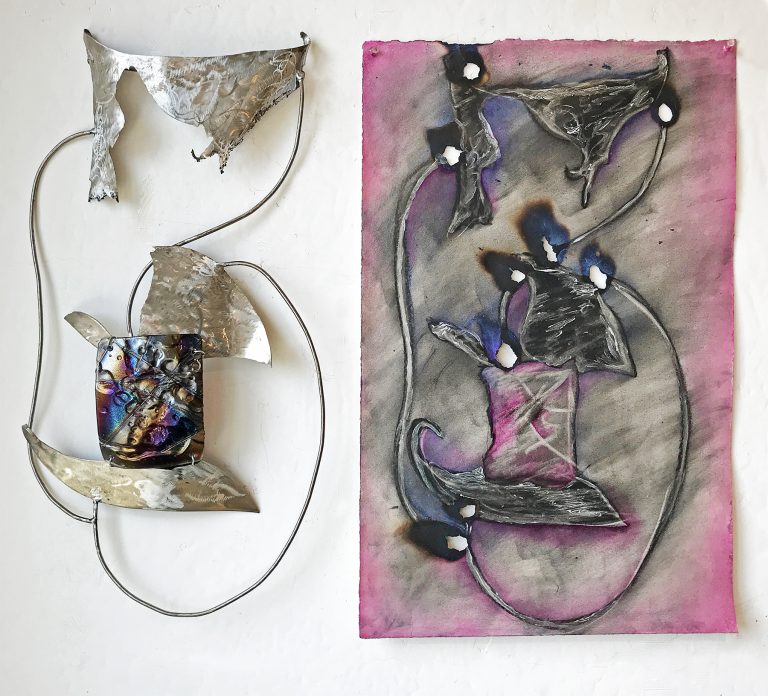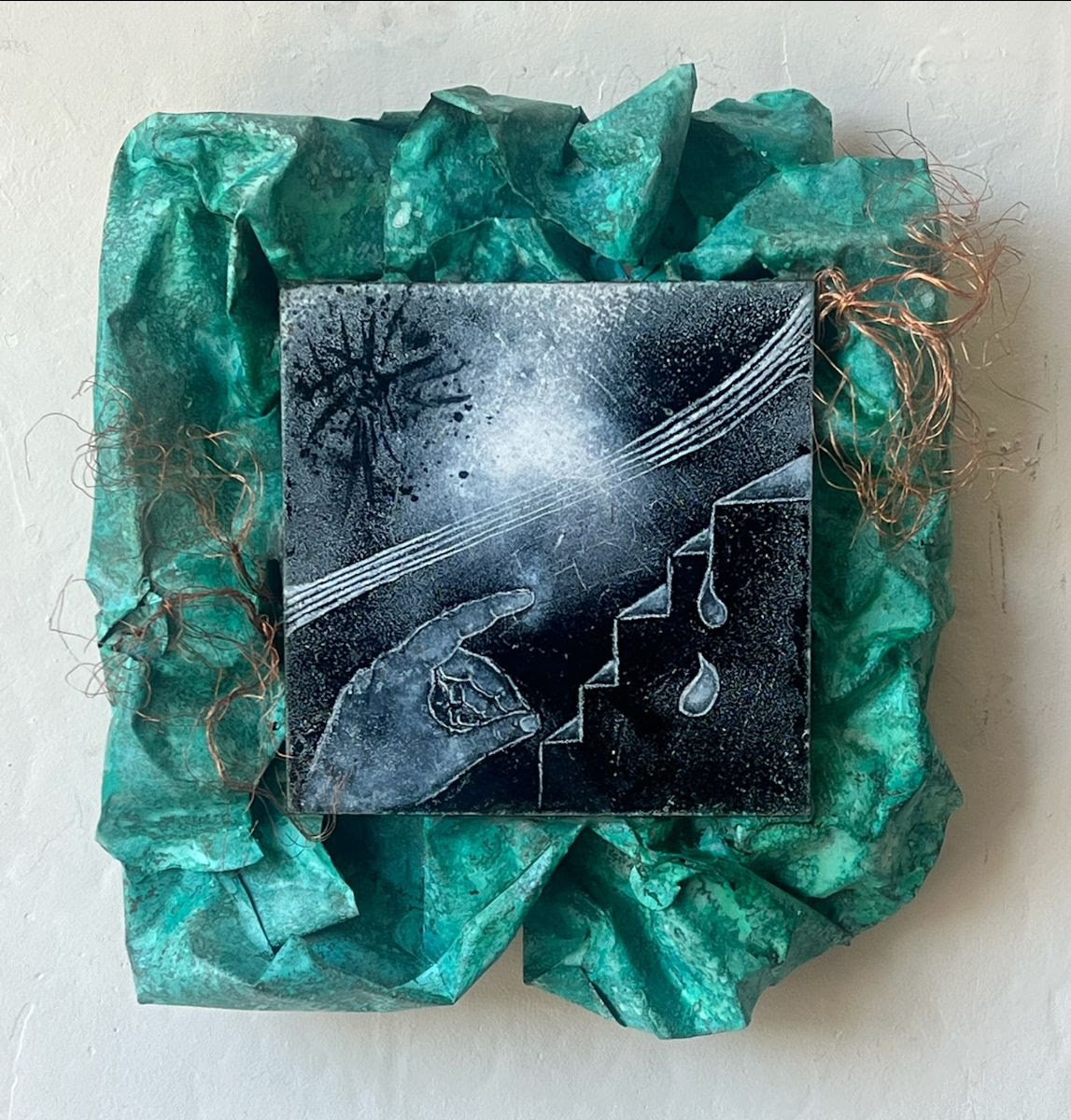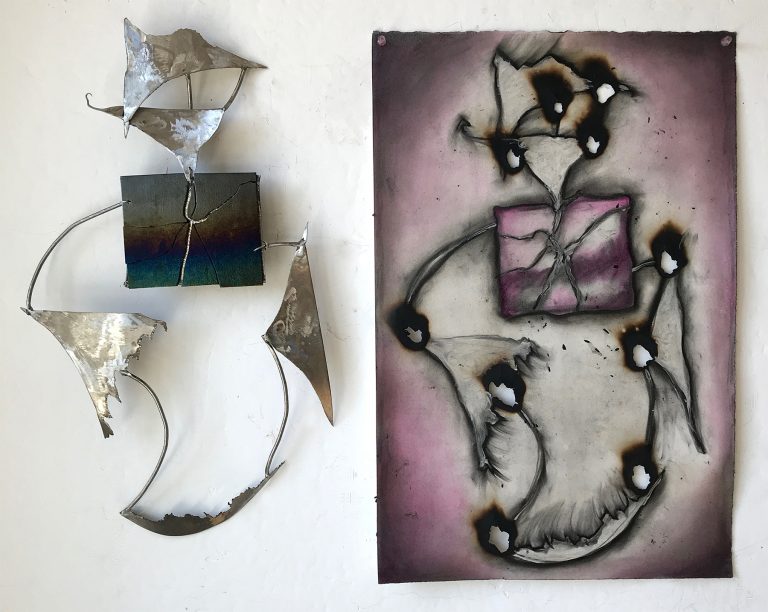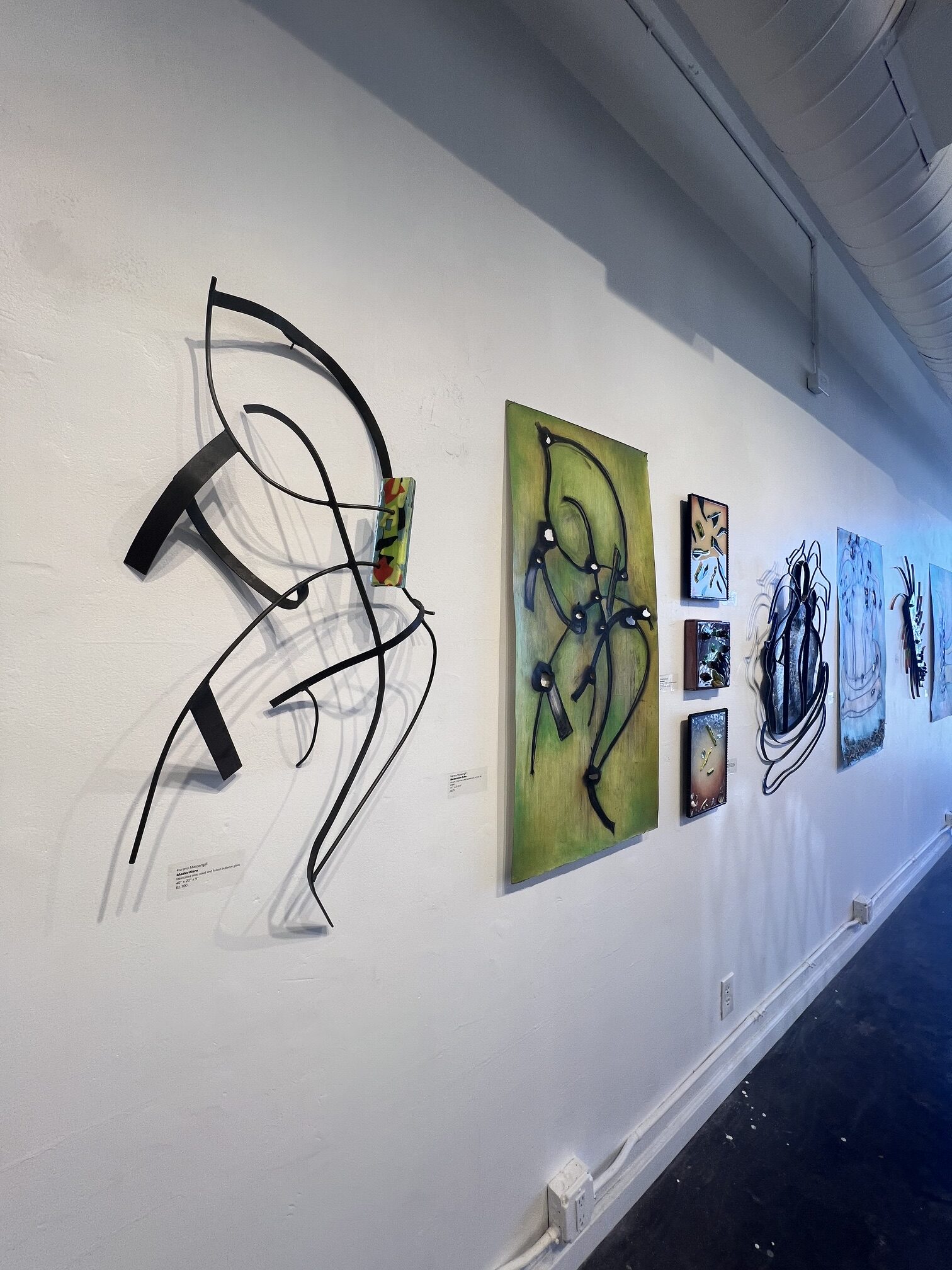

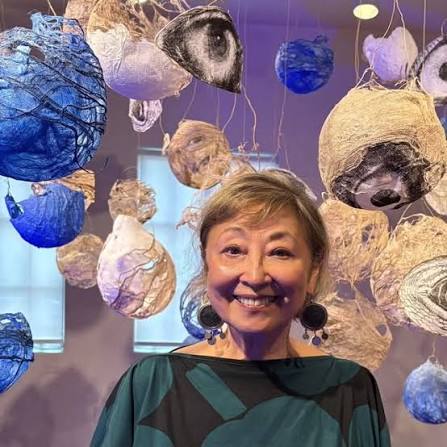
Lydia Nakashima Degarrod is an artist with a deep passion for informing and compelling her viewers. Working internationally, but based in San Francisco, Degarrod says she is inspired by the relationship between place, memory, material, and human experience. “I am particularly interested in things that are not immediately visible—memories, dreams, traces of migration, histories embedded in landscapes, and the ways people make meaning of their surroundings.”
Her expansive knowledge in these areas has been influenced by her background in anthropology. “I am drawn to observing,
listening, walking, collecting, and spending time with a place before deciding what a work should become. Sometimes an idea begins with a material; at other times it begins with a story, a landscape, or a question. I am interested in allowing these elements to influence one another rather than beginning with a predetermined image.”
Over time, Degarrod’s art practice has morphed in many different ways while maintaining “certain concerns” about the world and life itself.
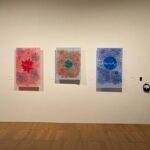
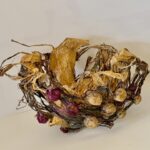
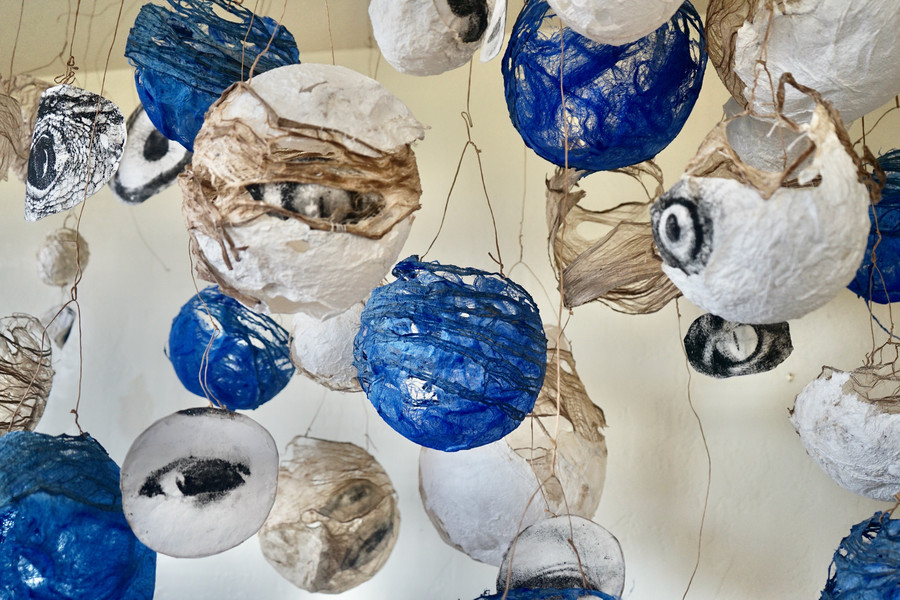
“I began with painting and printmaking, but over time I became increasingly interested in materials, processes, and the relationship between an artwork and the place in which it is made or experienced. The shift toward fiber, handmade paper, installation, and more research-based work allowed me to bring stories, archives, landscapes, dreams, memory, and lived experience more fully into my artmaking,” she says. She details the important methods she uses in her practice as being simply walking through this world and using her keen skills of observation.
“I don’t see my practice as moving from one style to another as much as expanding the questions I can ask through art. The materials have changed because the questions have changed,” she explains.
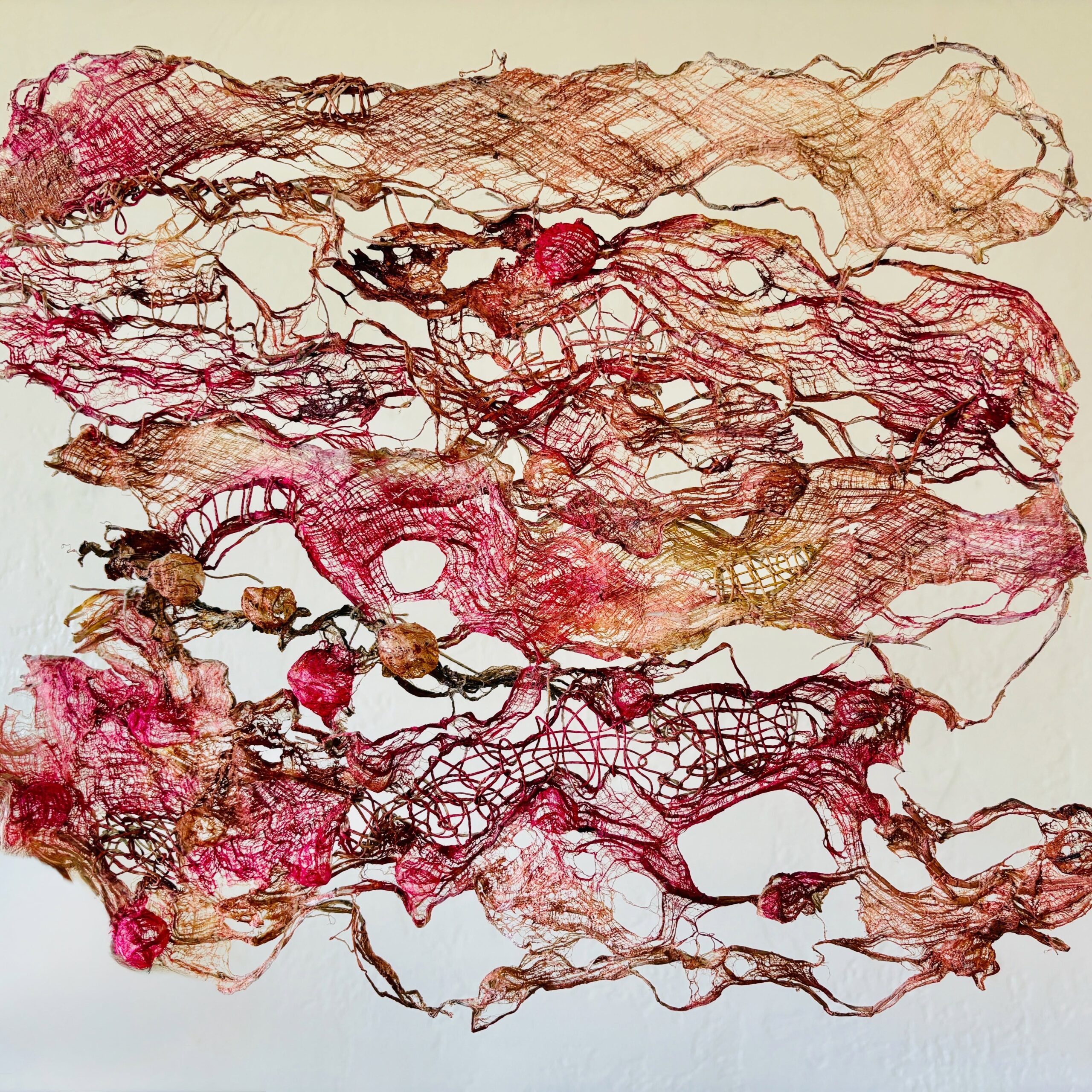
And speaking of materials, the artist works with mediums as diverse as handmade paper, natural and botanical fibers, textiles, printmaking, photography, drawing, sound, and installation.
She reveals that she is particularly drawn to “materials that have a history or a physical life of their own. Fiber is important to me because it can be transformed through processes of boiling, pounding, stretching, layering, stitching, and tearing. It carries both physical and metaphorical associations with connection, repair, migration, and transformation,” she attests.
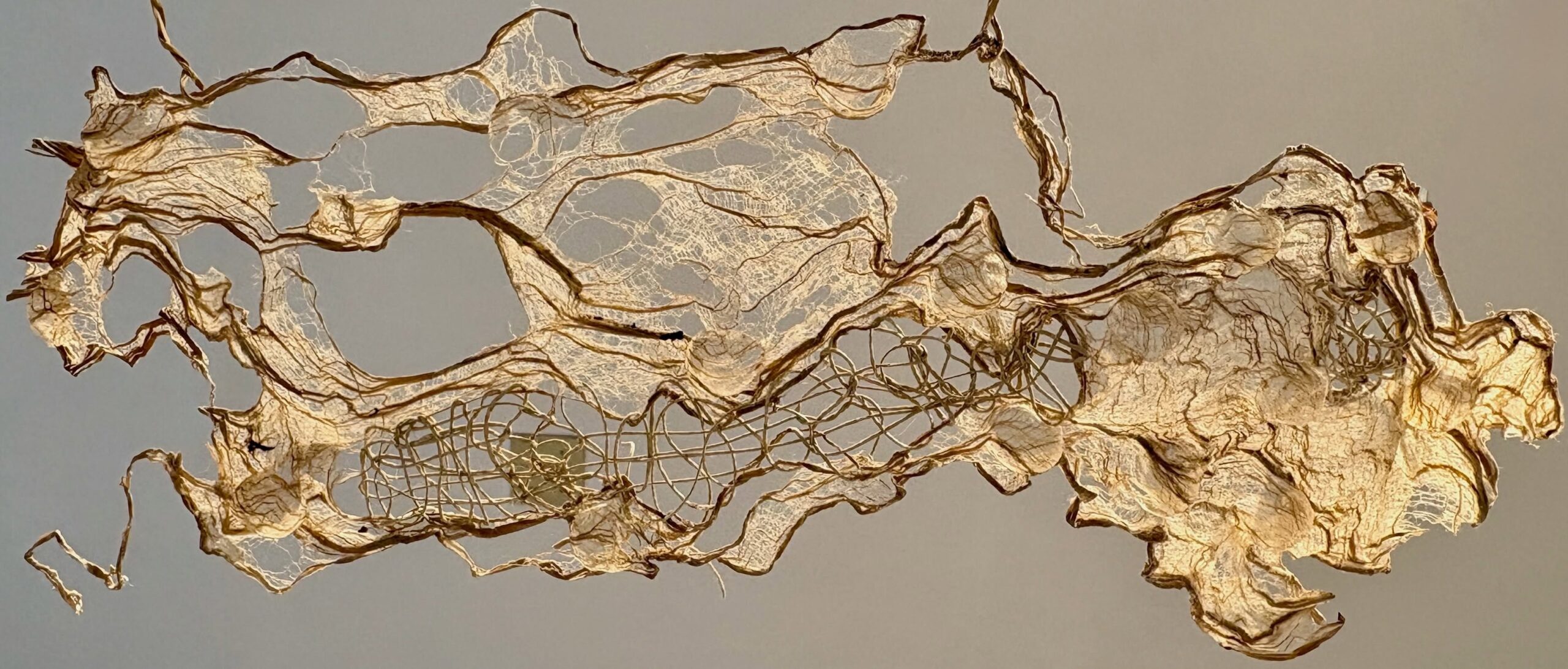
Thematically, the artist is most interested in relationships: “between landscape, ecological change, memory, and migration and displacement. I think about landscapes not simply as physical environments, but as places where different histories, memories, and forms of knowledge accumulate.”
But this is not Degarrod’s only focus. “I am also continuing to explore dreams and altered forms of perception. Dreams have been a
significant part of my research for many years, and I am interested in how they can become a way of imagining landscapes and experiences that cannot be represented through conventional observation.”
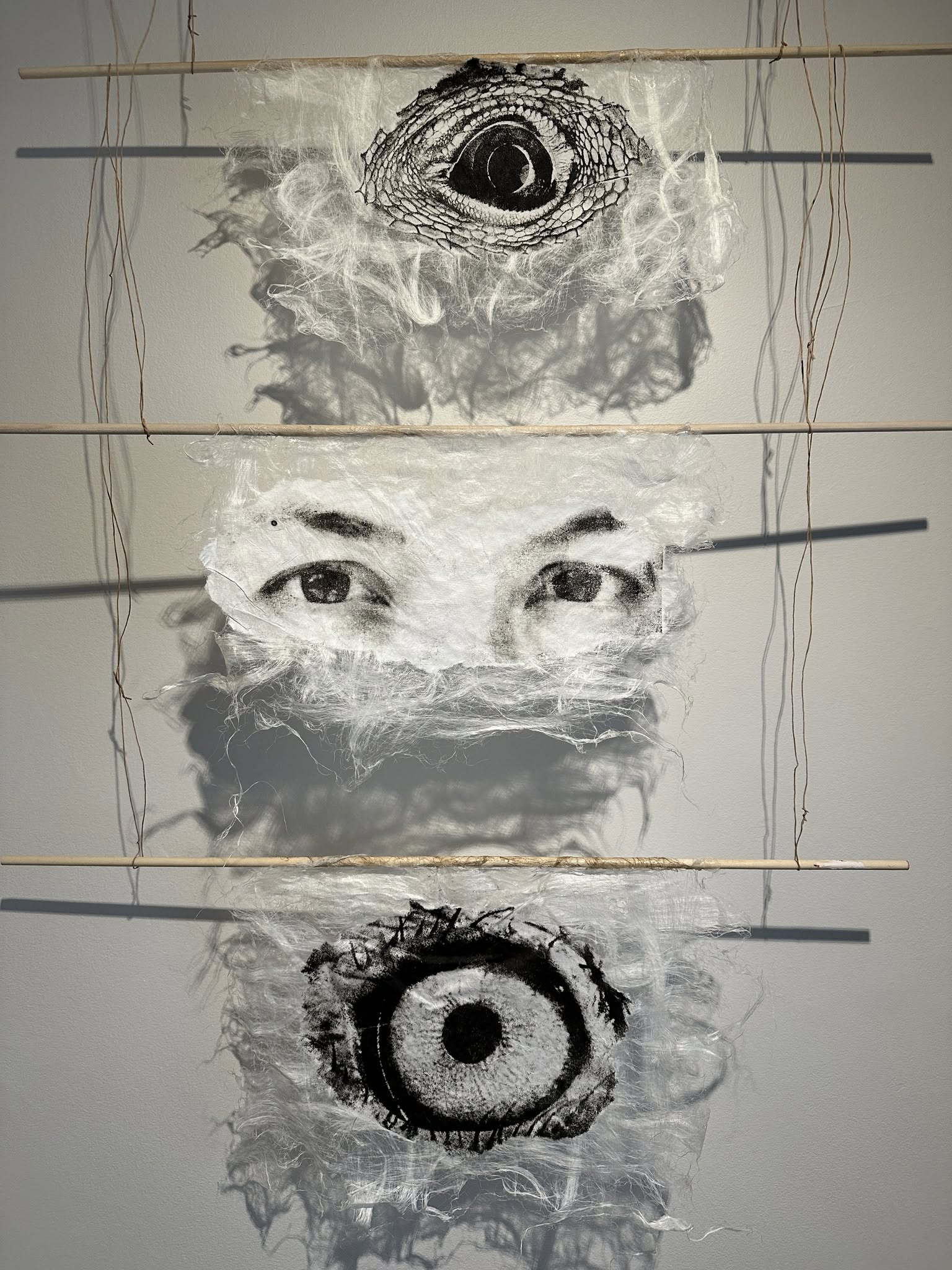
She is excited about the future, and combining the different “strands of my practice together, research, walking, material experimentation, and installation—and allowing them to generate new forms rather than knowing in advance what the final work will look like.”
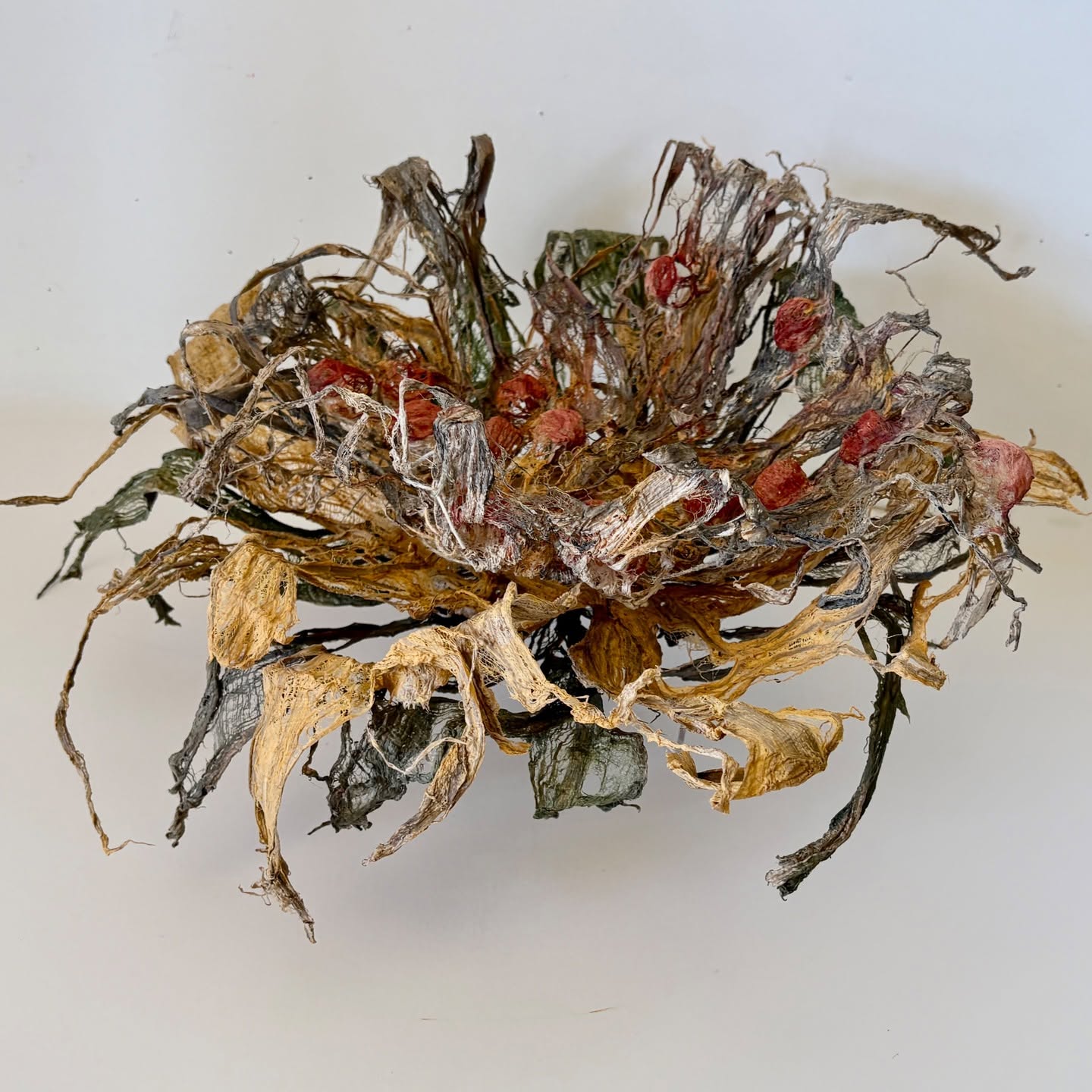
Degarrod has exhibited work at a wide range of global galleries and museums, including Diversions Fine Arts in Manhattan Beach, and upcoming exhibitions at Visions Museum of Textile Art in San Diego, Delta College, Gallery Route One, and Ohio
State University. She is also curating two art exhibitions at the Southern Utah Museum of Art for 2028.
Concurrently, she is developing new work, with her interest focused on creating what she describes as “larger, site-
responsive installations and continuing my exploration of botanical fibers, landscape, memory, and ecological change.”
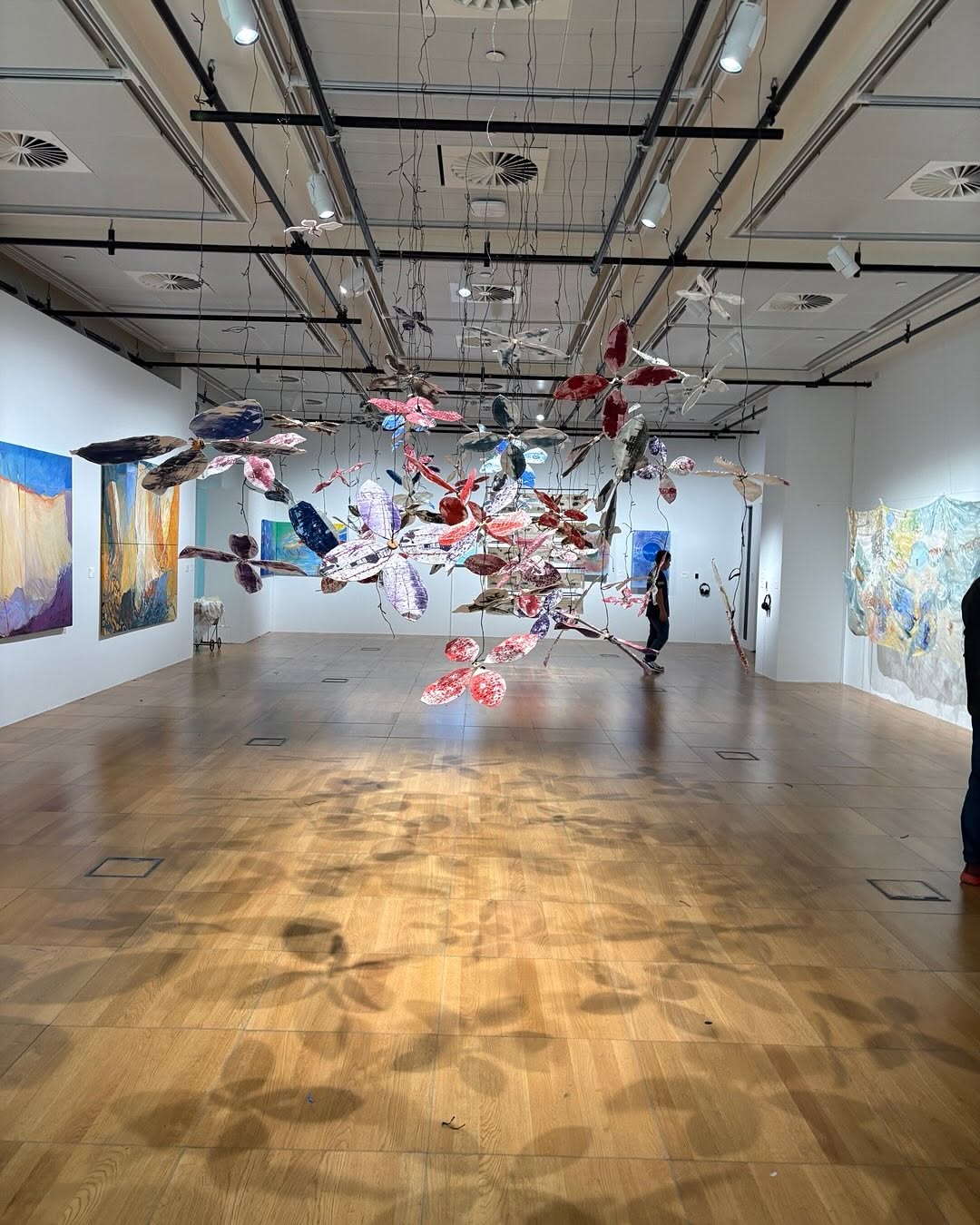
She wants her viewers to understand that the beautiful, highly intuitive work she creates is deeper than what they see exhibited.
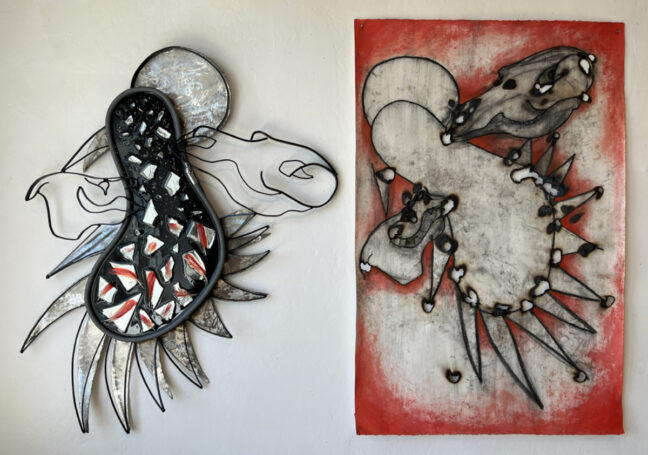
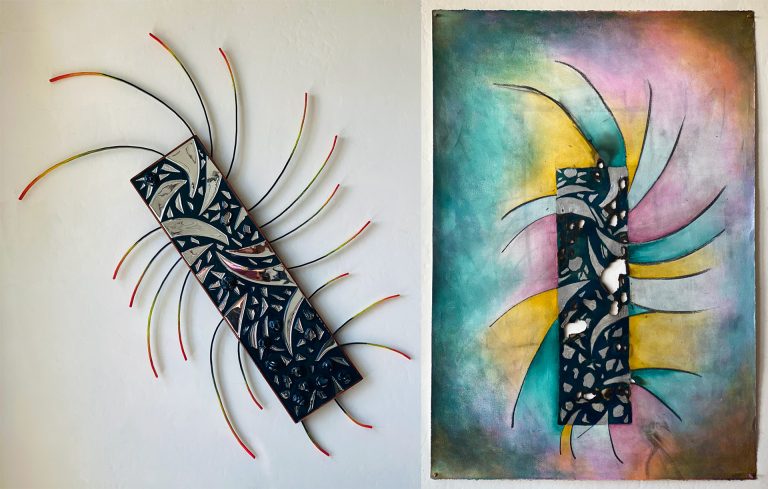
“The materials and forms are invitations to think about what may be hidden beneath the visible surface—memories, histories, dreams, migrations, losses, and forms of knowledge that are often difficult to represent.”
According to Degarrod, “I also hope that the work creates a space for slowing down. I am interested in art that does not
necessarily provide an immediate answer, but creates a moment of attention and allows different associations to emerge. The work may begin with a specific story or place, but I want viewers to bring their own memories and experiences into that encounter.”
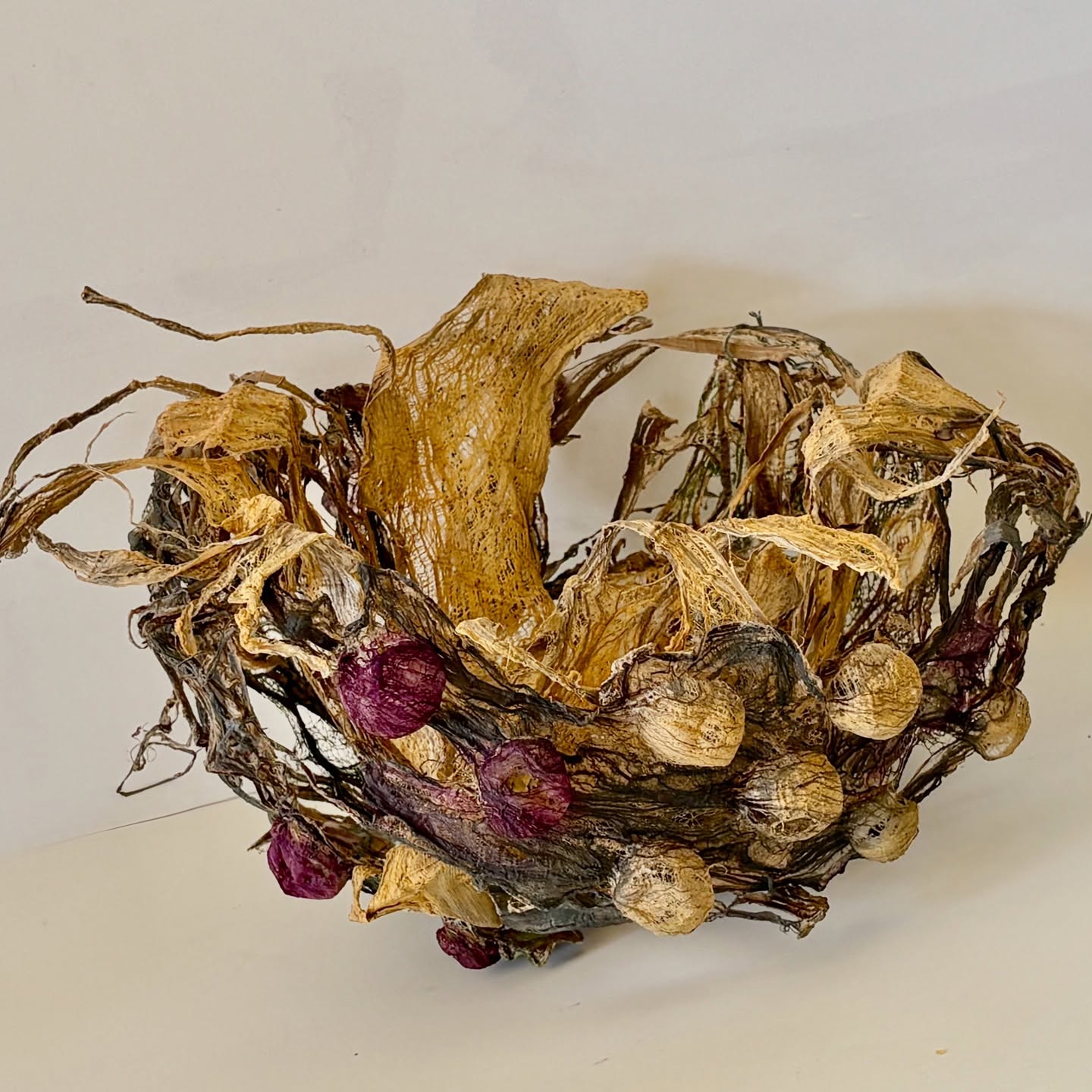
To do so, she often works with materials that are often natural and unique. The work may look delicate but they are not fragile: she is enormously interested in the fact that “resilience can exist within materials that appear vulnerable.”
She explains that “Many of the fibers I use undergo intense physical transformation. I boil, pound, stretch, tear, layer, and reconstruct them. The process itself involves stress, resistance, and transformation. The materials may look delicate, but they can endure a great deal.”
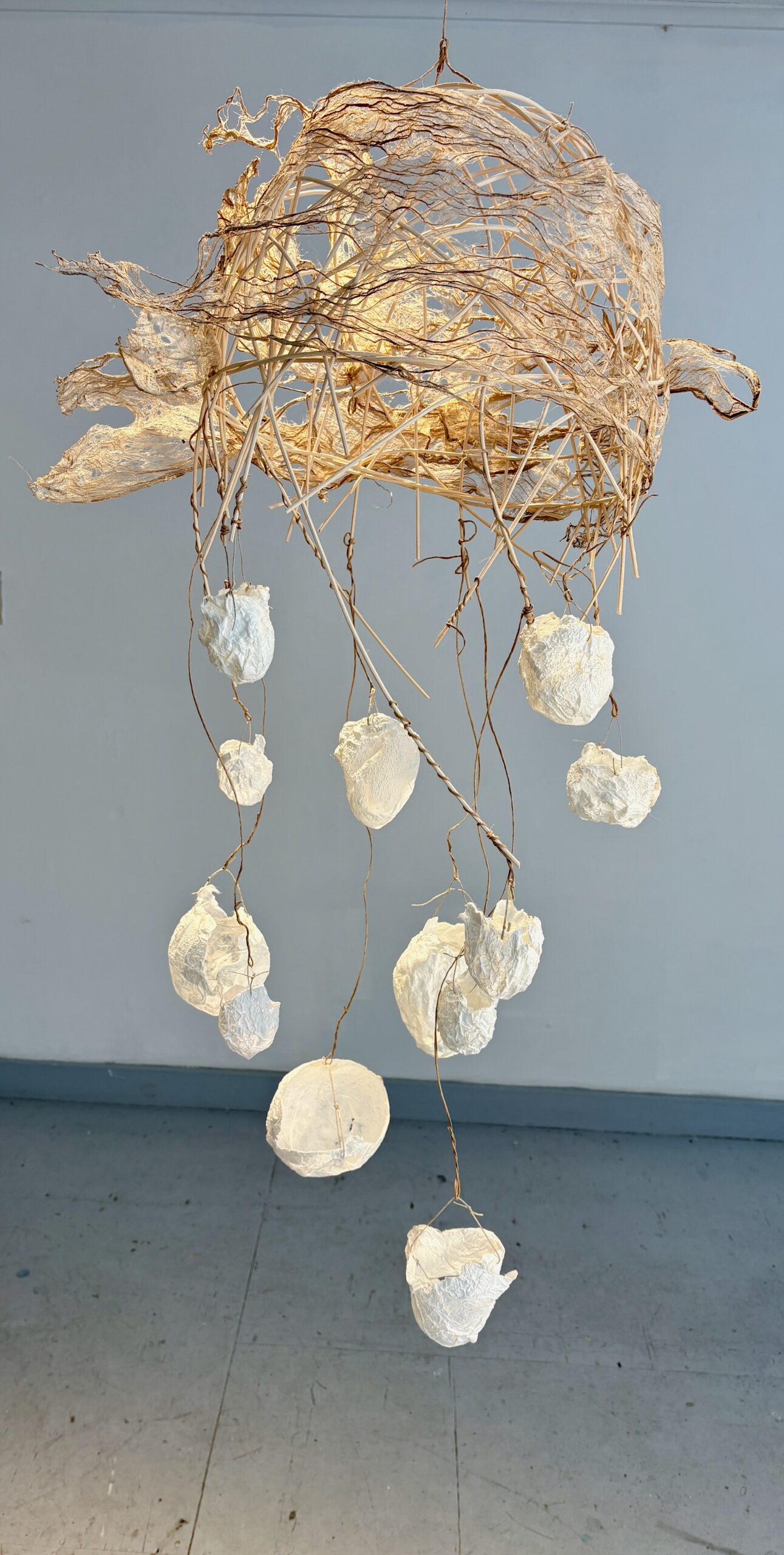
She finds herself drawn to natural and botanical materials because “they connect the work directly to the physical world. Plants carry histories of place, migration, adaptation, healing, labor, and survival. When I work with them, I am interested not only in their visual qualities, but also in what they might allow me to think about.”
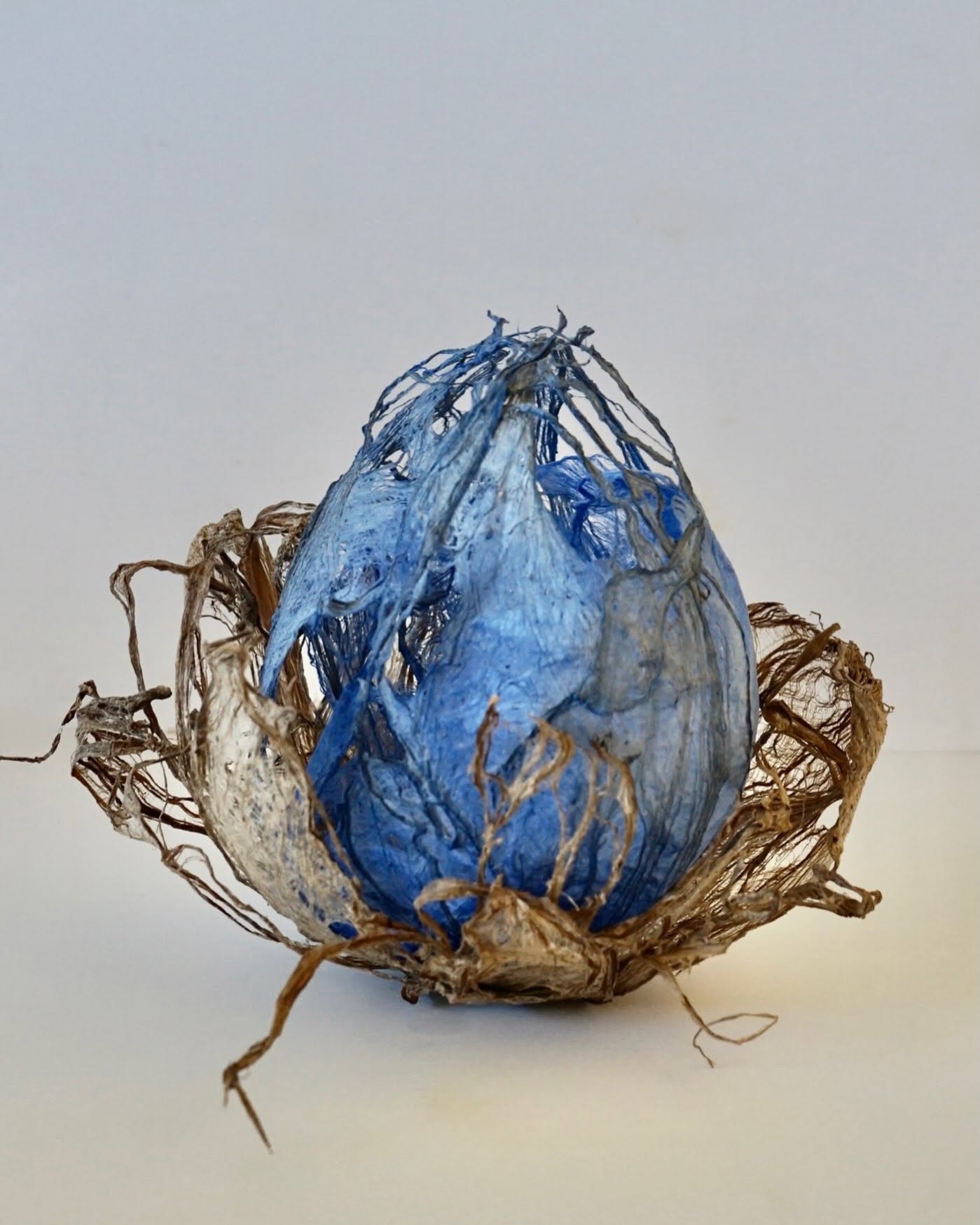
As an artist, she notes that “the apparent delicacy of the materials is part of the tension within the work. I am interested in how something that appears ephemeral or vulnerable can nevertheless carry histories and memories of remarkable endurance.”
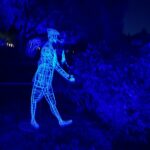
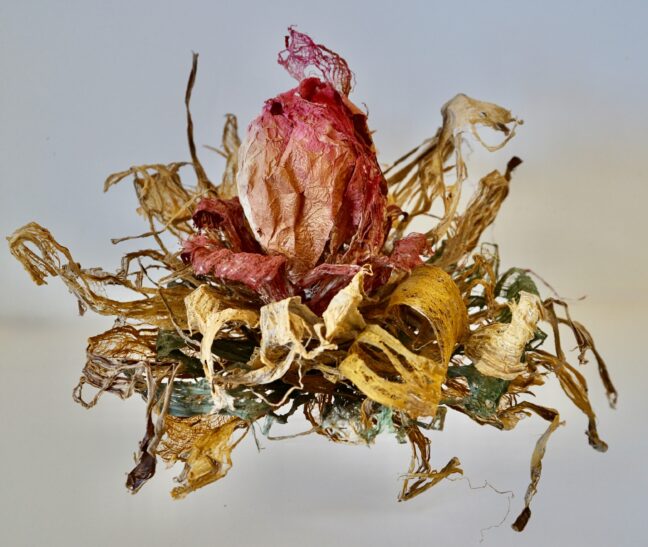
She describes one work that is especially significant for her: the installation Scattered Seeds of the Cotton Bolls. Its creation and display allowed me to honor the memories of my family’s migration from Japan to Latin America.”
The process of creation was layered. “In creating the handmade paper, I combined mulberry fiber, associated with my Japanese
heritage, with yerba buena, an herb used in Latin America for healing physical ailments. Bringing these two plants together became a symbolic way of connecting the two cultural landscapes of my family’s history. It also became a way of addressing, through art, the suffering and displacement that accompanied their migration.”
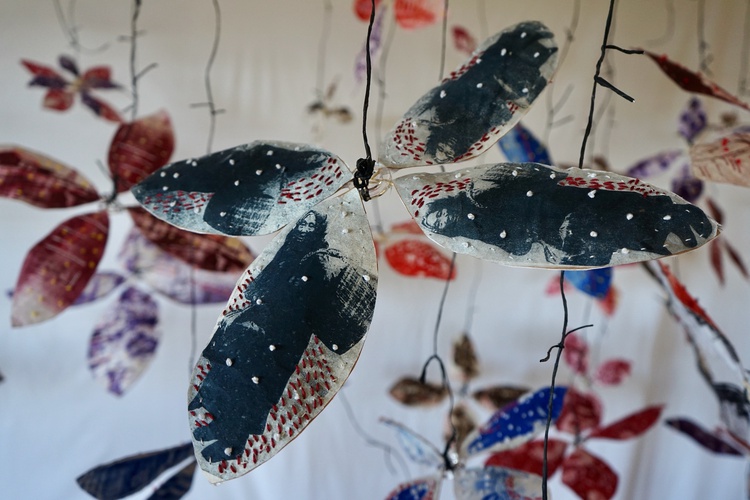
Additionally she “created flowers from this handmade paper, and each flower became a way of holding fragments of my family’s memories. The flowers are not simply representations of those memories; they are material embodiments of them,” she says. “The work is both material and deeply personal. It brings together ancestry, migration, healing, memory, and transformation. For me, its significance lies in turning an inherited history of displacement into a physical landscape of remembrance and symbolic healing.”
- Genie Davis; photos provided by the artist and by Davis